


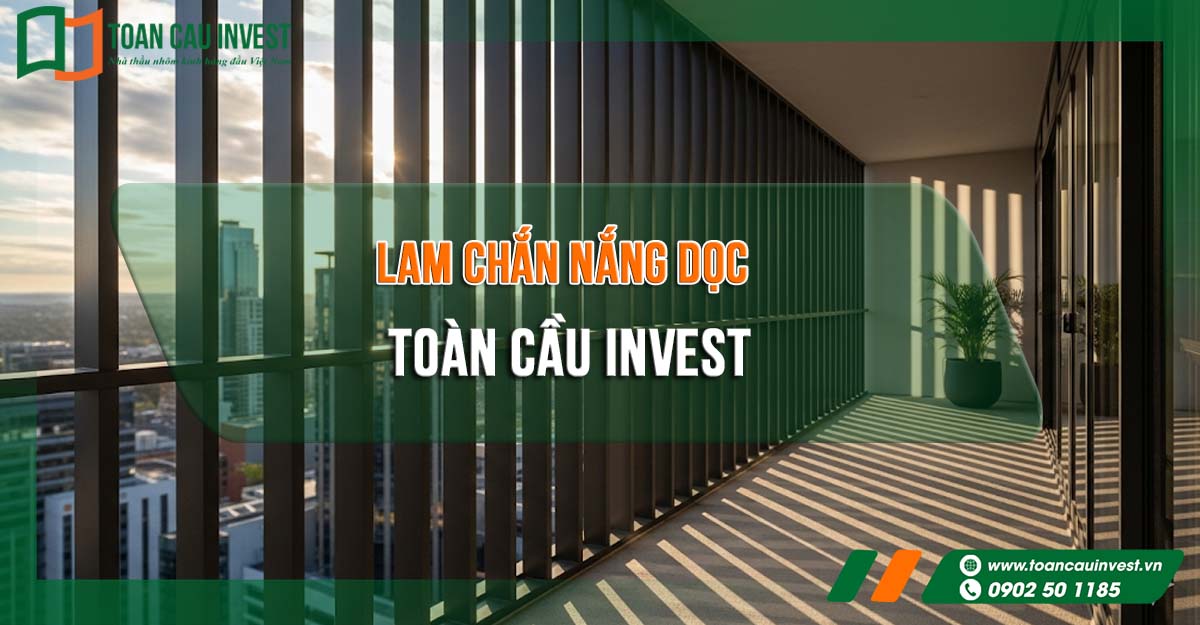
It is no coincidence that many Grade A office buildings, commercial complexes, and high-end hotels consistently prioritize Vertical Sun Louvers as a façade solution. Behind what may appear to be simple vertical fins lies a compelling story of energy efficiency, sustainability, and architectural expression of brand value.
So what drives investors and main contractors to commit to Vertical Sun Louvers from the early design stage? The answer lies in a set of advantages that are often underestimated yet critically important in contemporary architecture.
I. Structural Characteristics of Vertical Sun Louvers
Vertical Sun Louvers are an architectural shading solution designed as a system of vertical fins, installed in a coordinated manner across the building façade. The structure of this system is carefully engineered to achieve a dual purpose:
-
Effective solar shading and heat radiation reduction, and
-
A strong, modern aesthetic impact for high-rise buildings, large-scale office developments, and commercial centers.
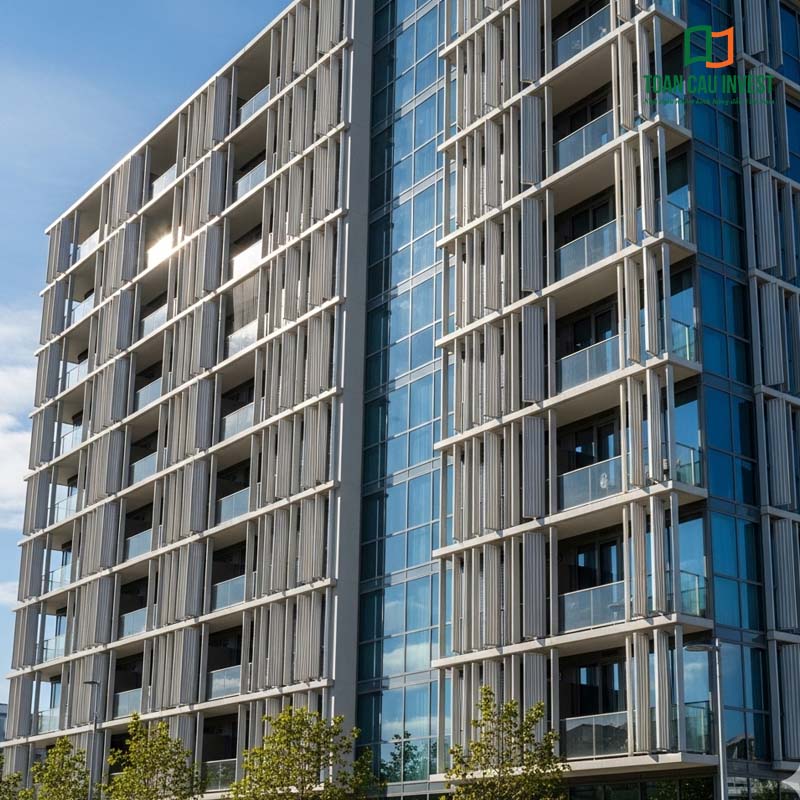
By running along the vertical axis, Vertical Sun Louvers not only control direct sunlight more efficiently especially on façades with prolonged solar exposure but also contribute to a bold, rhythmic architectural language that reinforces the identity and stature of large-scale developments.

Design Form and Architectural Composition
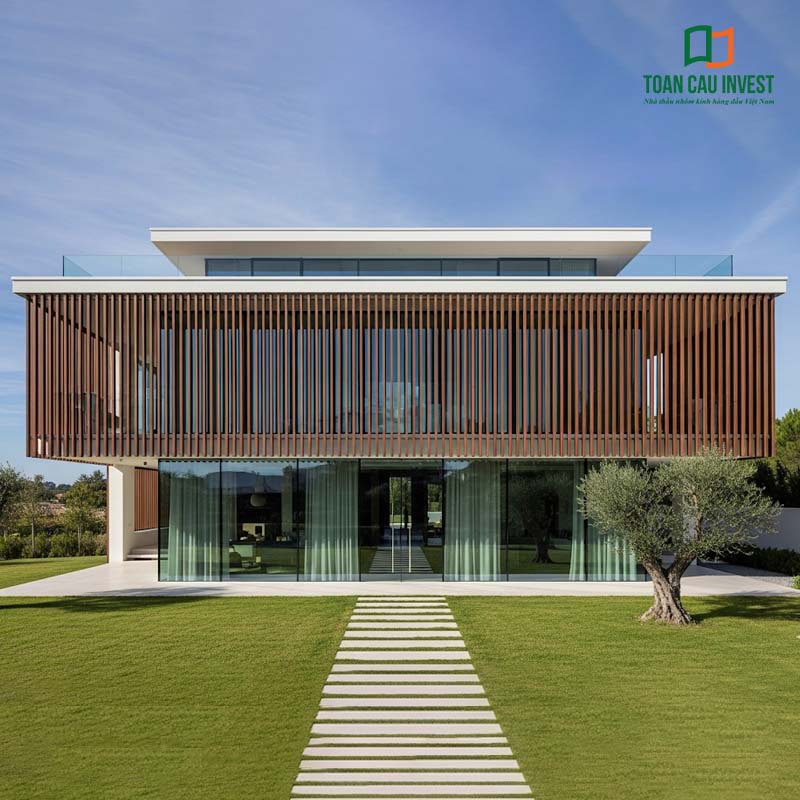
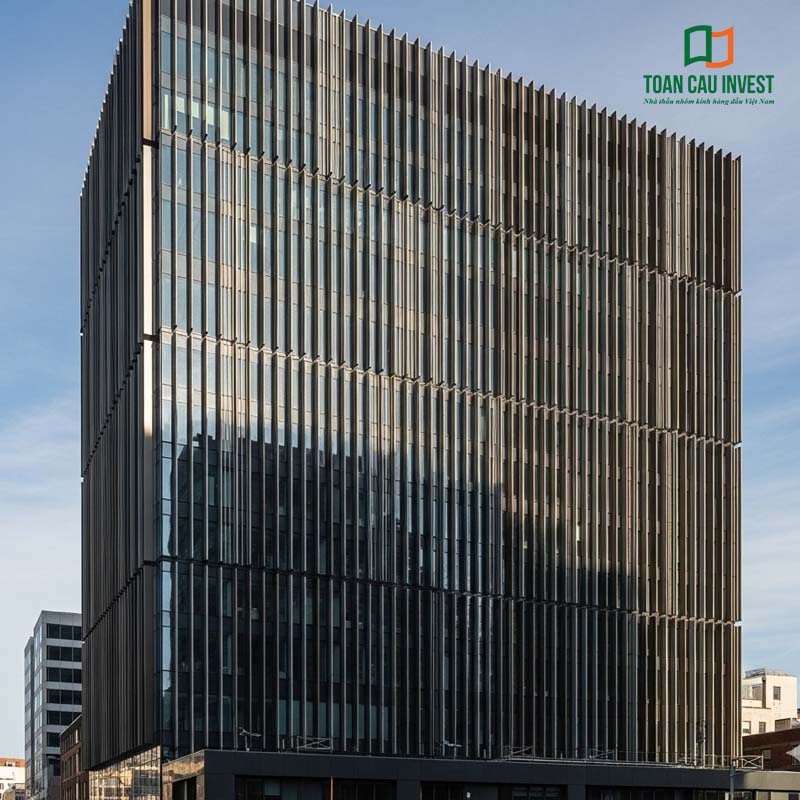
Vertical Sun Louvers are arranged vertically along the building façade, with fins installed in parallel and running continuously along the full height of the structure. This configuration creates a “second skin” that protects the glazing system behind while enhancing the depth of the façade.
-
Diverse cross-sectional profiles: rectangular, elliptical, oval, or custom-designed sections tailored to architectural requirements. For high-rise buildings, elliptical profiles are often preferred due to their reduced wind resistance.
-
Spacing and proportion: precisely calculated based on solar orientation, sun angles, and shading performance requirements. Proper spacing ensures optimal solar control without creating a sense of enclosure or obstructing outward views.
-
System integration capability: Vertical Sun Louvers can be seamlessly combined with horizontal louvers, bullet-shaped fins, or operable shading systems, creating a layered façade with strong depth and a distinct architectural language.
Materials
-
Powder-coated extruded aluminum: lightweight, corrosion-resistant, and available in a wide range of colors, making it suitable for most building types. This material accounts for the majority of applications in office buildings and high-rise residential projects.
-
High-grade aluminum alloys: used in projects requiring enhanced wind-load resistance, ensuring long-term structural stability and safety.
-
Hot-dip galvanized steel: suitable for industrial buildings or coastal areas with harsh environmental conditions.
-
Composite materials and wood-plastic composites: commonly applied in villas and high-end developments, offering unique aesthetic appeal, though at a higher cost and with more demanding maintenance requirements.
Installation Systems
-
Fixed system: louvers are directly anchored to steel frames or concrete structures. This system offers cost efficiency, high durability, and minimal maintenance.
-
Operable (motorized) system: Vertical Sun Louvers are mounted on rotating axes and adjusted via manual cranks or electric motors. The system allows louver angles to vary from 0° to 90°, enabling effective solar shading while regulating daylight and natural ventilation. This solution is widely adopted in Grade A office towers and commercial complexes.
-
Modular hanging system: suitable for projects requiring fast installation or the ability to replace individual louver modules when necessary.
Key Technical Specifications
Louver thickness: typically ranges from 1.4 mm to 2.5 mm. For high-rise projects, a minimum thickness of ≥ 2.0 mm is required to withstand wind loads.
Louver dimensions: width from 50-300 mm, while length is determined by floor height and the selected installation solution.
Wind load resistance: calculated in accordance with TCXDVN 2737:1995 and Eurocode standards.
Surface finishing options:
- Powder coating: color durability of 10-15 years, with a wide range of color options.
- Anodized finish: metallic appearance, premium aesthetic, and high abrasion resistance.
- PVDF coating: high-end solution with color durability of over 20 years, particularly suitable for coastal projects.
Connections and Load-Bearing Framework
-
Steel or aluminum alloy sub-frames: serve as the primary load-bearing structure, directly connected to beams, slabs, or curtain wall systems.
-
Mechanical connection details: stainless steel bolts, brackets, and anti-vibration supports are designed as an integrated system to ensure safety under strong wind and storm conditions.
-
Vibration control and thermal expansion solutions: mandatory for high-rise buildings, ensuring long-term stability and consistent performance throughout the system’s lifecycle.
Integrated Façade Solution
Vertical Sun Louvers are not standalone elements; they function as an integral component of a comprehensive façade strategy. When combined with Low-E glazing, horizontal louvers, or operable shading systems, the building achieves:
-
Optimized solar shading performance.
-
Reduced operational energy costs.
-
Enhanced architectural identity and long-term aesthetic value.
With a robust structural design, durable materials, and high adaptability to architectural intent, Vertical Sun Louvers go beyond a purely technical element. They represent a sustainable architectural solution that improves building performance, reduces energy consumption, and delivers enduring aesthetic value over the building’s entire lifecycle.
II. Advantages of Vertical Sun Louvers
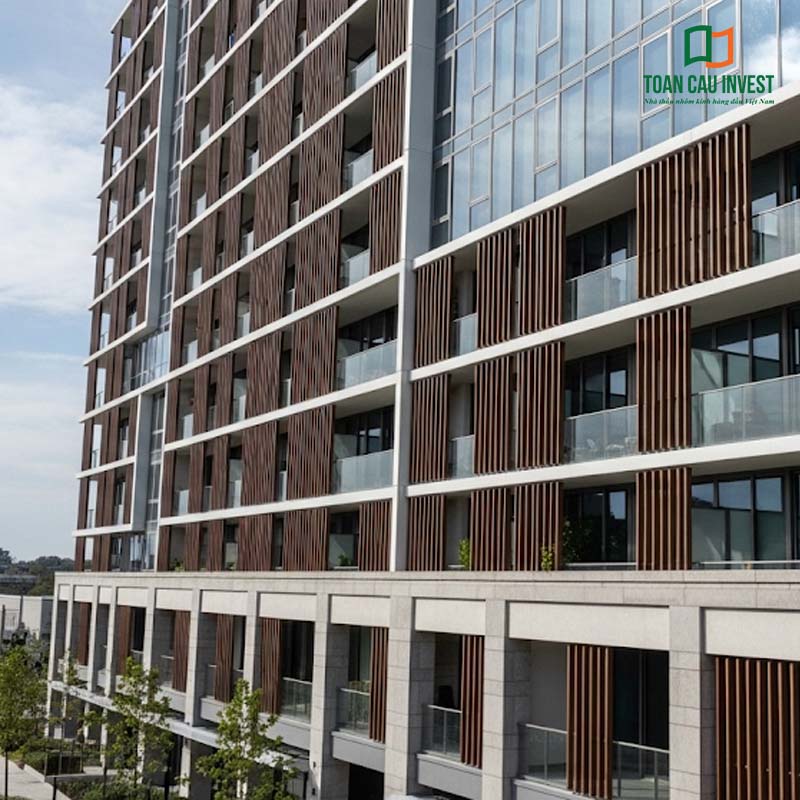
In modern developments particularly office towers, commercial complexes, and public buildings Vertical Sun Louvers serve far more than a basic shading function. They deliver outstanding value across technical performance, operational efficiency, and architectural aesthetics, explaining why this system is increasingly favored by investors and architects alike.
Effective Daylight Control and Heat Load Reduction
Designed along the vertical axis, Vertical Sun Louvers effectively block direct solar radiation on building façades especially on east- and west-facing elevations, which are exposed to intense sunlight for extended periods throughout the day. As a result, they help to:
-
Reduce heat gain entering interior spaces.
-
Lower air-conditioning loads, delivering 15-20% savings in operational energy consumption.
-
Maintain a more stable and comfortable indoor thermal environment for work and living spaces.
Enhanced Aesthetics and Architectural Value
With continuous vertical fins defining the façade, Vertical Sun Louvers create a strong, modern, and refined visual identity. When integrated with glass curtain wall systems, they:
-
Add depth, rhythm, and proportion to the building envelope.
-
Reinforce a distinctive design language, enhancing architectural recognition and brand value.
-
Suit a wide range of premium developments, including high-rise buildings, commercial centers, hotels, and luxury villas.
Improved Durability and Structural Safety
A key advantage of Vertical Sun Louvers lies in their ability to mitigate wind pressure acting directly on glazing surfaces. Functioning as a protective buffer, the louvers help to:
-
Reduce the risk of glass cracking or breakage on façades.
-
Minimize vibration and movement under strong winds or storm conditions.
-
Ensure long-term operational safety and structural reliability for high-rise buildings throughout their service life.
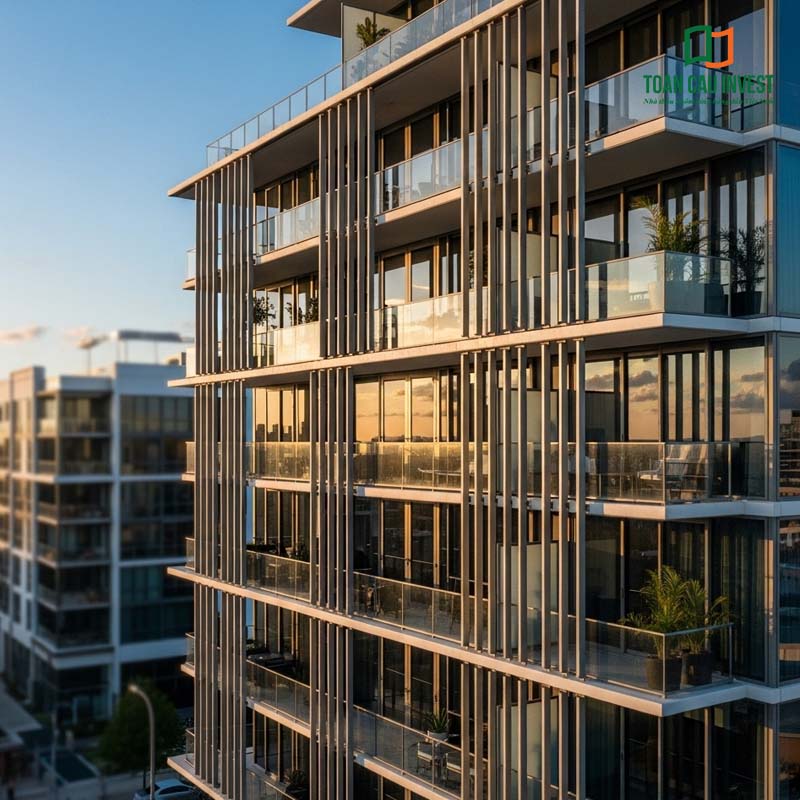
Optimized Operation and Flexible Use
With a fixed system, Vertical Sun Louvers offer high durability and require minimal maintenance throughout their service life. With operable (motorized) systems, investors and end users can adjust louver angles seasonally or throughout the day to optimize daylight intake and natural ventilation. This flexibility ensures occupant comfort while enabling the building to operate with greater energy efficiency.
Sustainability and Environmental Performance
Vertical Sun Louvers are commonly manufactured from extruded aluminum or aluminum alloys materials known for their high recyclability and long-term durability. Surface finishes such as powder coating or PVDF help maintain color stability for 15-20 years, significantly reducing lifecycle maintenance costs. These characteristics play an important role in supporting green building certifications such as LEED and LOTUS.
III. Classification of Vertical Sun Louvers
Vertical Sun Louvers are among the most widely adopted façade shading and decorative solutions in contemporary architecture. To meet diverse requirements in terms of performance, aesthetics, and budget, this system is classified according to multiple criteria. Understanding these classifications allows investors, main contractors, and architects to select the most appropriate Vertical Sun Louvers solution for each specific project.
Classification by Material
Aluminum Vertical Sun Louvers
-
Advantages: lightweight, durable, corrosion-resistant, long service life, and easy to maintain.
-
Applications: office buildings, commercial centers, and high-rise developments requiring long-term performance and refined aesthetics.
Steel Vertical Sun Louvers
-
Advantages: exceptional rigidity and load-bearing capacity, suitable for large-scale projects.
-
Limitations: heavier weight and the need for periodic anti-corrosion surface treatment.
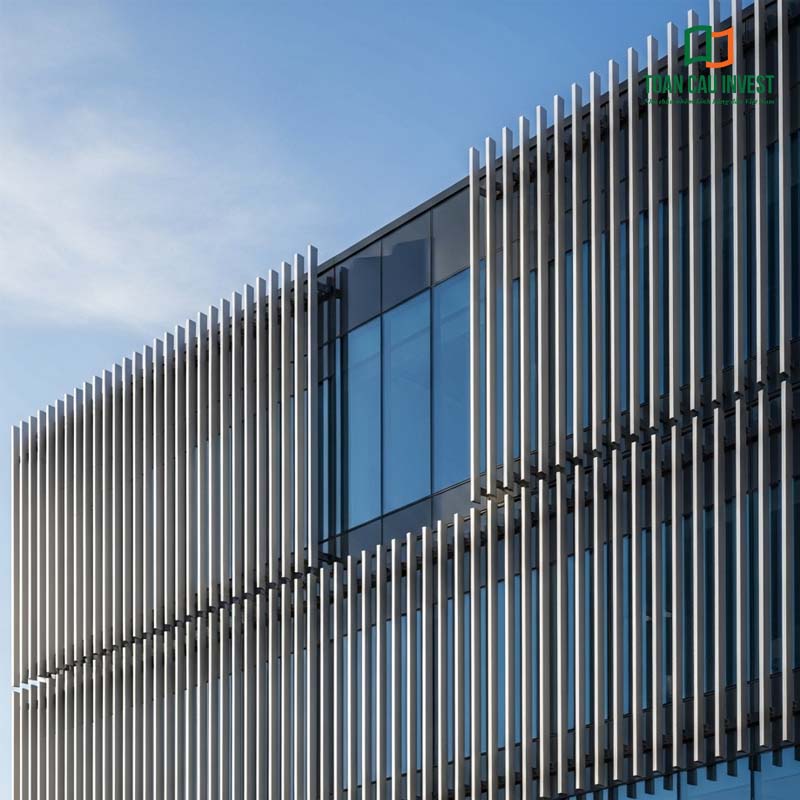
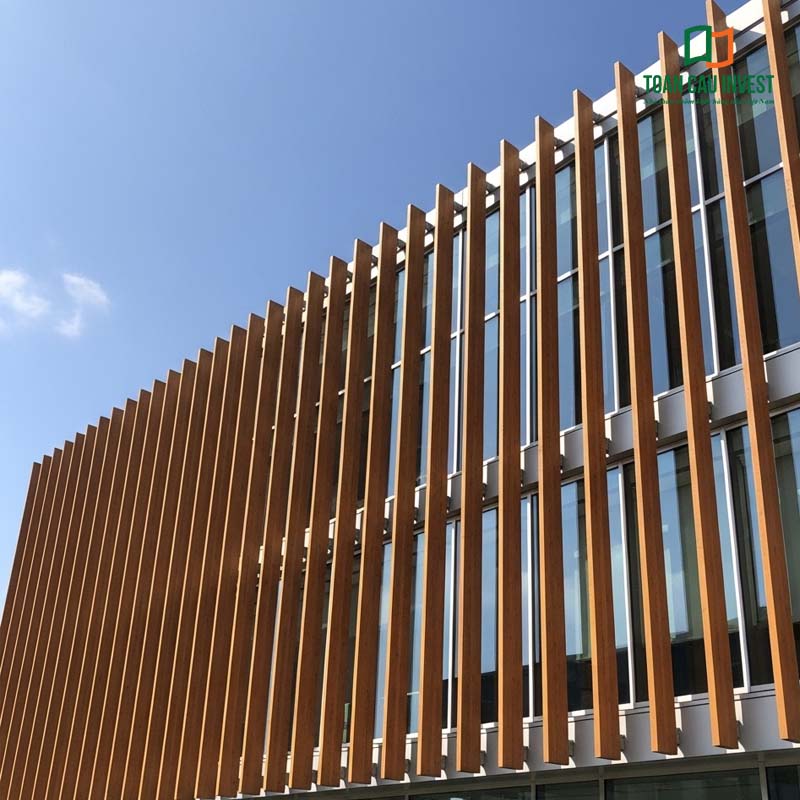
Timber or Wood-Effect Vertical Sun Louvers
-
Advantages: deliver a warm, natural appearance, well suited to villas, resorts, and eco-oriented architectural concepts.
-
Limitations: require careful surface treatment to prevent warping, termite damage, and weather-related deterioration.
Glass Vertical Sun Louvers
-
Advantages: modern and luxurious, creating distinctive light and reflection effects on the façade.
-
Applications: commercial centers and landmark buildings with strong iconic ambitions.
Classification by Louver Profile and Cross-Section
-
Rectangular-profile Vertical Sun Louvers: simple and robust in appearance, commonly used in office buildings.
-
Elliptical (oval / aerofoil) Vertical Sun Louvers: optimized for solar shading efficiency and reduced wind resistance, while offering a softer and more refined aesthetic.
-
Triangular or diamond-shaped Vertical Sun Louvers: create unique architectural accents, typically applied in bespoke or signature designs with symbolic value.
Classification by Fixation and Operability
Fixed Vertical Sun Louvers
-
Permanently anchored to the supporting framework, ensuring consistent shading performance.
-
Lower initial investment and maintenance costs.
-
Commonly used in large-scale developments requiring uniformity and visual consistency.
Operable (Rotating) Vertical Sun Louvers
-
Equipped with manual or motorized rotation mechanisms.
-
Allow flexible adjustment of louver angles to control daylight, airflow, and views.
-
Ideal for premium projects such as hotels, commercial complexes, and Grade A office buildings.
Classification by Installation Location
-
Façade-mounted Vertical Sun Louvers: installed along the building exterior, providing effective solar shading while acting as a strong architectural statement.
-
Balcony Vertical Sun Louvers: reduce heat gain, enhance privacy, and contribute to well-defined building massing.
-
Canopy or skylight Vertical Sun Louvers: assist in controlling natural daylight penetration, improving indoor spatial comfort and user experience.
With this level of diversity, each type of Vertical Sun Louvers offers distinct characteristics tailored to specific design intents and project requirements. Investors, main contractors, and architects should evaluate material selection, functional performance, aesthetic objectives, and cost efficiency in parallel to arrive at the most optimal solution.

IV. Pricing of Vertical Sun Louvers
In contemporary architectural projects, the pricing of Vertical Sun Louvers reflects not only material costs, but also differences in quality, technical standards, and the overall solution delivered by the contractor. For investors and main contractors, understanding the factors that influence unit pricing is essential for accurate budgeting and selecting the right implementation partner.
Key Factors Affecting Vertical Sun Louvers Pricing
a. Material Selection
-
Powder-coated extruded aluminum: the most widely used option on the market, offering moderate pricing and long-lasting color durability.
-
High-grade aluminum alloys (PVDF-coated or anodized): higher initial cost, but superior lifespan and performance, particularly suitable for high-rise and coastal projects.
-
Galvanized steel / powder-coated steel: cost-effective with good structural rigidity, though requiring higher maintenance over time.
-
Timber and wood–plastic composites: pricing varies significantly depending on origin and brand, typically applied in resort and hospitality developments.
-
Glass: the highest-cost option, requiring specialized supporting structures and more frequent maintenance.
b. Louver Dimensions and Thickness
-
Larger louver sizes and greater thickness directly increase manufacturing, transportation, and installation costs.
-
High-rise buildings or projects located in high-wind zones require thicker louvers (1.8 mm – 2.5 mm) compared to low-rise developments.
c. Operating Mechanism
-
Fixed Vertical Sun Louvers: lower cost and straightforward installation.
-
Operable (rotating) Vertical Sun Louvers: require mechanical systems or electric motors, resulting in prices 20-40% higher than fixed systems, along with ongoing maintenance requirements.
d. Project Scale and Architectural Design
-
Larger construction volumes allow for better optimization of average unit pricing.
-
Customized designs such as curved louvers, inclined fins, or systems integrated with glass curtain walls typically carry higher costs than standard solutions.
e. Surface Finishing Requirements
-
Standard powder coating: the most common and cost-effective option.
-
Anodized or PVDF finishes: higher upfront cost, but ensure color durability of over 15 years, making them well suited for premium developments.
Market Reference Pricing
In the current market, pricing for Vertical Sun Louvers typically ranges from VND 1,200,000 to 3,500,000 per m², depending on material selection, louver thickness, fixed or operable mechanisms, and surface finishing requirements. For high-end projects such as hotels, commercial centers, and Grade A office buildings, pricing generally falls at the upper end of this range to ensure both long-term durability and architectural refinement.
Added Value When Partnering with a Reputable Contractor
For investors and main contractors, cost should never be the sole deciding factor. A reputable contractor such as Toàn Cầu Invest delivers far more than competitive pricing for Vertical Sun Louvers, including:
-
Integrated design solutions that optimize both performance and cost efficiency.
-
ISO-certified in-house manufacturing facilities with strict quality control processes.
-
A highly experienced engineering team with proven capability across large-scale developments.
-
Long-term warranty and maintenance policies, ensuring stable and reliable building operation.
V. Toàn Cầu Invest – Top 10 Aluminum Glass and Sun Louver Contractors in Vietnam
With more than a decade of growth and industry experience, Toàn Cầu Invest has established itself as one of the Top 10 aluminum, glass, and sun louver contractors in Vietnam, partnering with numerous landmark projects nationwide.
In particular, for Vertical Sun Louvers, Toàn Cầu Invest delivers not only products that meet international standards, but also a comprehensive end-to-end solution from design and fabrication to installation, warranty, and long-term maintenance ensuring performance, aesthetics, and durability throughout the project lifecycle.
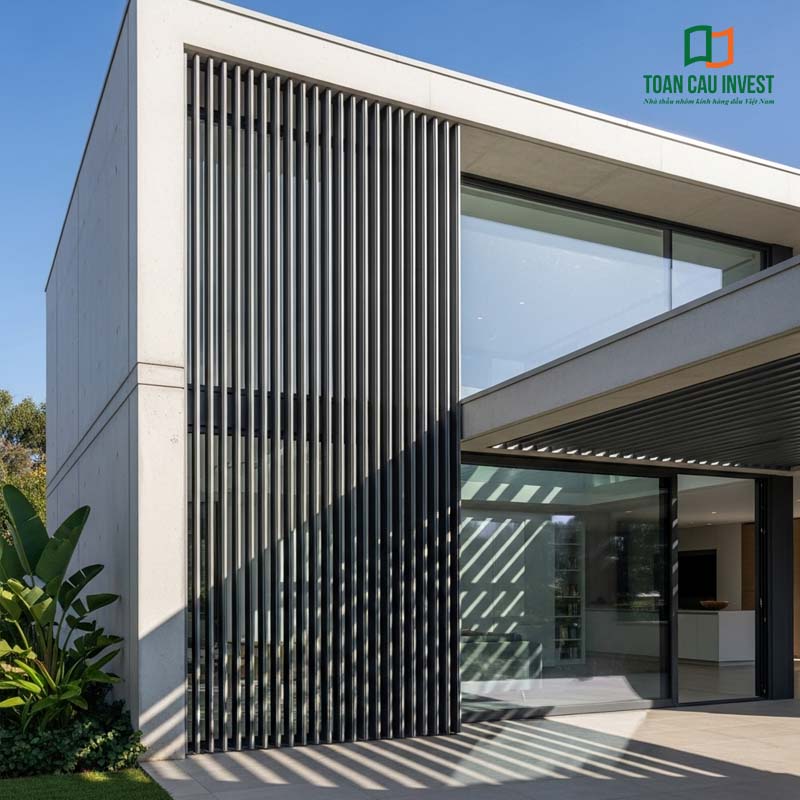
Design Capability and Solution Consulting Expertise
The engineering and architectural teams at Toàn Cầu Invest possess in-depth expertise in material performance, safety standards, and the aesthetic requirements of different building typologies. For each project, we conduct a thorough analysis of solar orientation, wind loads, and architectural intent to develop the most effective Vertical Sun Louvers solution—ensuring optimal solar shading, energy efficiency, and enhanced architectural value.
Advanced Manufacturing Facilities
Toàn Cầu Invest operates two large-scale manufacturing plants in both Northern and Southern Vietnam, equipped with aluminum and glass fabrication lines certified to ISO 9001:2015 standards. With full control over in-house production, we ensure that pricing for Vertical Sun Louvers remains transparent, competitive, and consistently controlled across every stage—from material selection and surface treatment to final product finishing.
Extensive Project Execution Experience
We have successfully delivered a wide range of major projects, including government administrative headquarters, five-star hotels, commercial centers, and high-end urban developments. In practice, each building type requires a tailored shading approach from fixed aluminum Vertical Sun Louvers for office towers to operable louver systems for luxury hotels. This hands-on experience enables Toàn Cầu Invest to consistently meet stringent technical requirements and demanding project schedules.
Turnkey Services and Quality Commitment
A key differentiator of Toàn Cầu Invest lies in our end-to-end delivery model. B2B clients benefit not only from transparent pricing, but also from comprehensive support throughout the project lifecycle:
-
On-site surveys and professional technical consultation.
-
Detailed design of Vertical Sun Louvers solutions fully integrated with glass façade systems.
-
On-schedule execution by highly experienced installation teams.
-
3–5 year warranty and periodic maintenance programs, ensuring long-term performance and reliability of the louver system.
Market Position and Industry Reputation
The trust placed by hundreds of investors and main contractors over more than a decade stands as clear proof of Toàn Cầu Invest’s market credibility. Beyond being recognized among the Top 10 aluminum, glass, and sun louver contractors in Vietnam, we are strategically positioned to become a leading provider of integrated aluminum and glass solutions in Southeast Asia, pioneering advanced technologies and elevating contemporary architectural standards.
- Hotline: 0902 50 1185 – 0902 168 238
- Website: www.toancauinvest.vn
- Office: LK 12–31, Văn Khê New Urban Area, La Khê Ward, Hà Đông District, Hanoi