


Curved Curtain Wall has become a modern architectural trend, bringing softness, elegance, and distinction to a wide range of projects – from office towers and commercial centers to luxury villas. Unlike flat glazing systems, a Curved Curtain Wall requires specialized manufacturing and installation techniques, combining refined aesthetics with stringent technical standards. For this reason, its true value can only be realized when executed by a contractor with comprehensive capabilities, proven experience, and dedicated production facilities.
I. The Growing Application of Curved Curtain Walls
In rapidly developing urban landscapes, buildings are no longer designed merely for functionality but are also expected to express unique architectural identities. A Curved Curtain Wall has emerged as a preferred choice, offering a softer design language that stands apart from conventional flat façades.
Modern Architecture Favors Curved Glass
With advantages such as uninterrupted sightlines, natural daylight enhancement, and fluid architectural expression, a Curved Curtain Wall makes buildings more distinctive and memorable in the marketplace. These qualities are highly valued by investors, architects, and general contractors when developing high-end, iconic projects.
Beyond aesthetics, the trend of sustainable and green architecture further accelerates the adoption of curved façades. When combined with Low-E or multi-layer safety glass, a Curved Curtain Wall not only ensures excellent thermal and acoustic insulation but also optimizes long-term operating costs.
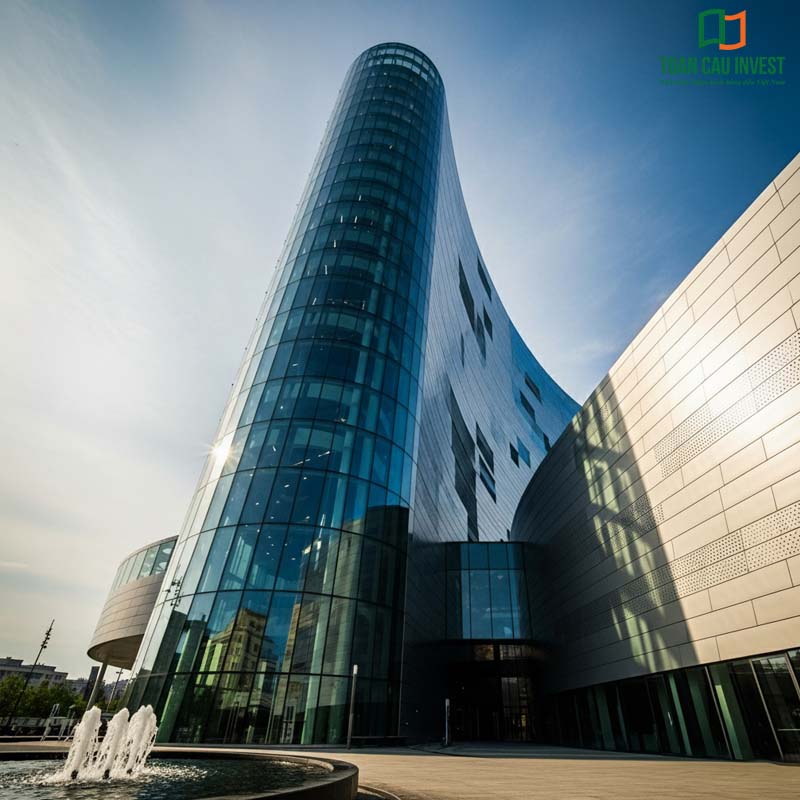
Typical Applications of Curved Curtain Walls
Curved Curtain Walls are now widely applied across multiple building segments, particularly in:
-
Commercial centers and showrooms – creating striking façades, expanding display visibility, and attracting customers.
-
Podium blocks and high-rise buildings – serving as architectural highlights for façades, enhancing project branding and identity.
-
Luxury hotels and Grade A office towers – optimizing open spaces, maximizing natural daylight, and delivering a premium user experience.
-
Villas and upscale residences – introducing distinctive design elements aligned with modern, elegant architectural styles.
Clearly, a Curved Curtain Wall is not only an aesthetic trend but also a solution that elevates commercial value and enhances building performance. It is particularly suited for projects that demand uniqueness, prestige, and long-term sustainability.
See also: Aluminum-Glass Doors
II. Technical Characteristics of Curved Curtain Walls
In modern architecture, a Curved Curtain Wall is not merely an aesthetic feature but also a structural system that demands rigorous technical precision. To meet the requirements of premium projects, this solution must be strictly controlled throughout every stage from design and manufacturing to installation.
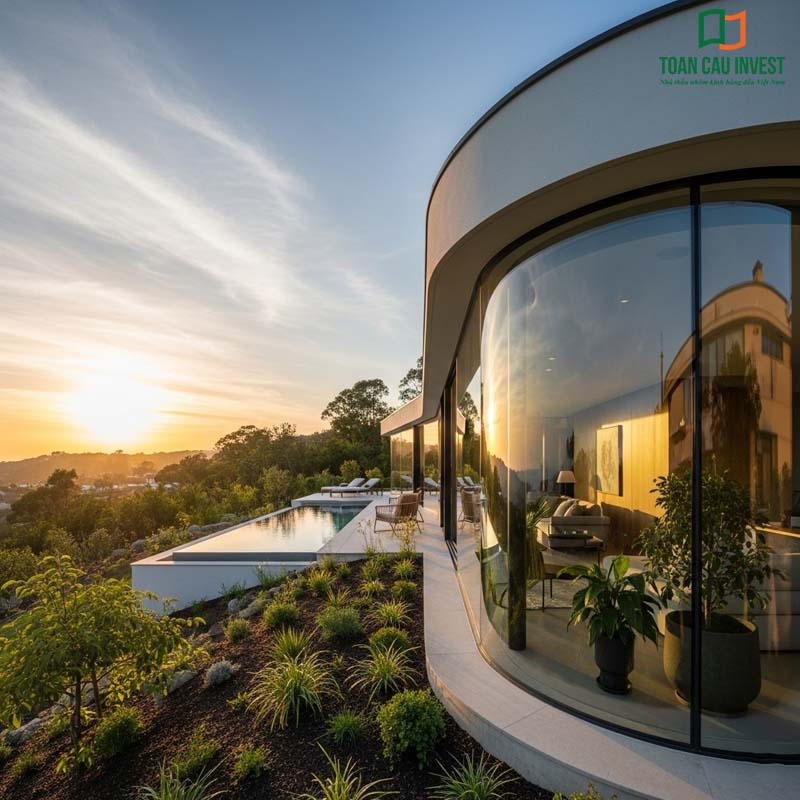
Curvature Radius and Technical Limitations
The curvature radius is the core factor that determines both the form and the feasibility of a Curved Curtain Wall. Depending on design requirements, glass panels can be shaped with:
-
Large curvature radii – producing gentle curves, suitable for expansive façades.
-
Small curvature radii – creating sharper curves, often used for architectural highlights or focal points.
In practical production, the minimum achievable radius depends on several factors:
-
Glass thickness: typically ranging from 5mm to 19mm.
-
Bending technology: thermal bending, mold pressing, or hybrid methods.
-
Glass type: annealed glass, tempered glass, or laminated safety glass.
For high-end projects, technical requirements go beyond simple shaping. Precision must be absolute to ensure that glass panels integrate seamlessly with the aluminum framing system — without gaps, misalignments, or angular deviations.
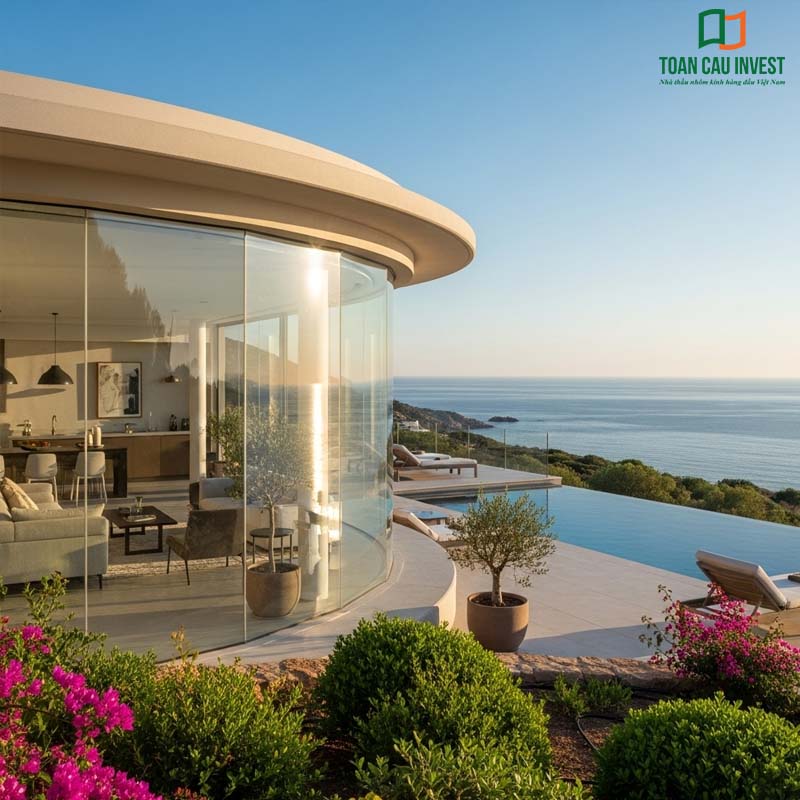
Advanced Manufacturing Technologies for Curved Glass
Curved glass is primarily produced using thermal bending technology in specialized furnaces. Glass panels are heated to the appropriate temperature, pressed over a steel mold, and then cooled with compressed air to achieve a permanent shape.
The current technologies include:
-
Tempered thermal bending – creating curvature while increasing strength to 3–5 times that of standard annealed glass.
-
Laminated bent glass – combining multiple layers to enhance shatter resistance and user safety.
-
Low-E or reflective coatings – meeting thermal insulation and UV protection requirements, ideal for Grade A office buildings.
Thanks to these technologies, Curved Curtain Walls can now incorporate oversized glass panels (over 3 meters in height), fulfilling both the aesthetic and iconic demands of large-scale developments.
Precision and Structural Performance of Curved Glass
One of the greatest challenges in constructing a Curved Curtain Wall is maintaining dimensional accuracy. Even a deviation of a few millimeters can complicate installation, compromising airtightness and safety.
Key technical parameters to consider include:
-
Allowable curvature tolerance: ±1.5mm per linear meter of arc.
-
Flexural strength and wind-load resistance: compliant with EN 12150 or TCVN 7455 standards.
-
Thermal shock resistance: essential for exterior façades exposed to significant day–night temperature variations.
When paired with advanced aluminum systems (such as Stick, Semi-Unitized, or Unitized), a Curved Curtain Wall can achieve a lifespan of over 25 years while maintaining transparency, safety, and thermal performance.
Why Technical Excellence Matters
The technical distinctiveness of a Curved Curtain Wall lies not only in its graceful curvature but also in the absolute precision of its design, fabrication, and installation. This is why investors and general contractors should entrust such works to companies equipped with modern factories, proven expertise in complex projects, and highly skilled engineering teams — ensuring that the final result matches the architectural vision from the very beginning.
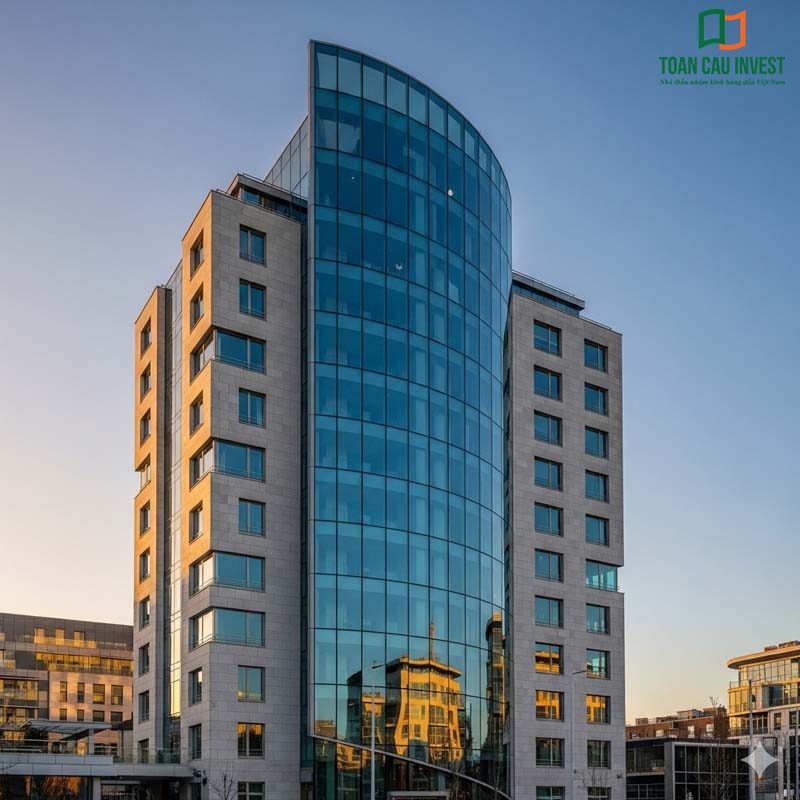
III. Challenges and Requirements in Implementing Curved Curtain Walls
Implementing a Curved Curtain Wall is a highly complex process in which every technical detail can directly impact both project quality and schedule. This scope of work not only demands advanced manufacturing technology but also requires systematic construction management, extensive field experience, and a team of highly skilled engineers.
Manufacturing and Transportation Challenges
The production of curved glass requires specialized furnaces, precision molds, and uniform temperature control technology. Even the slightest deviation in the curvature radius can result in misalignment with the aluminum framework, potentially compromising the entire façade system.
Transportation presents additional risks: curved glass panels are large, heavy, and shaped with unique curvature, making them prone to cracking or breakage without proper packaging, protection, and specialized handling equipment. This demands contractors with proven expertise and rigorous risk-control procedures.
Seamless Integration with Aluminum Systems
Unlike flat façades, a Curved Curtain Wall requires absolute precision when fitting glass with the aluminum system. Even minimal deviations can cause gaps, poor sealing, water leakage, reduced wind resistance, and compromised acoustic or thermal insulation.
For large-scale projects, 3D modeling and full-scale mock-up testing for wind and water resistance are often required prior to mass installation. Such challenges can only be addressed by contractors with advanced technical capacity and extensive execution experience.
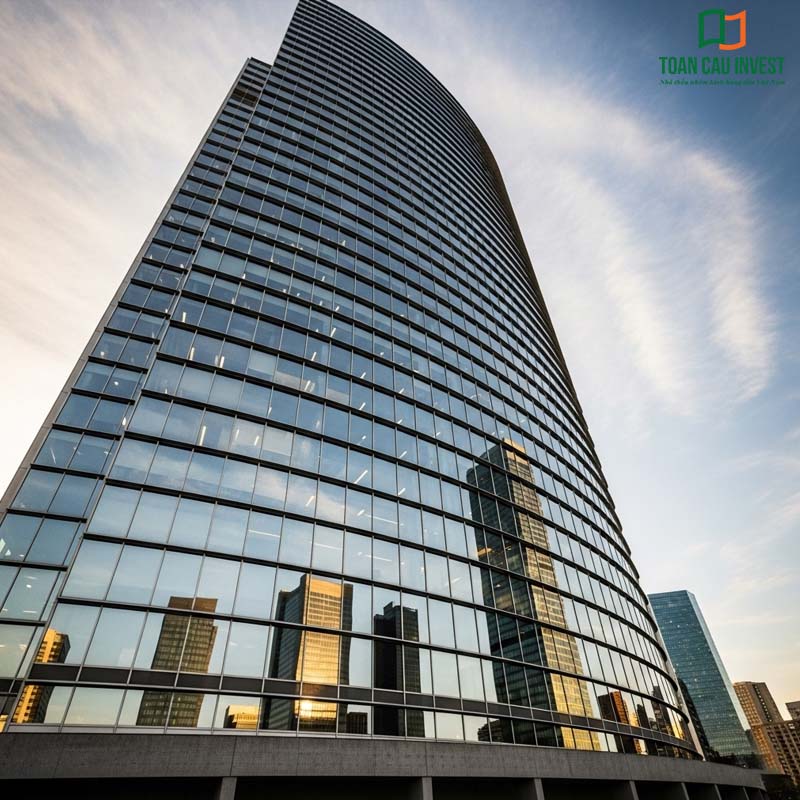
Safe and Efficient Installation Solutions
Since Curved Curtain Walls are often applied in podiums of commercial centers, hotels, and high-rise buildings, their installation must adhere to the strictest safety standards. The process requires:
-
Specialized lifting equipment and scaffolding for handling oversized curved glass panels.
-
Construction procedures designed to minimize the risks of cracking and curvature deviations.
-
Inspection and acceptance systems in compliance with TCVN and EN standards for wind resistance, water tightness, and structural safety.
These challenges clearly demonstrate that a Curved Curtain Wall is not a scope any contractor can undertake. For investors and general contractors, this becomes a decisive criterion when selecting a façade contractor one with modern manufacturing facilities, internationally certified quality management systems, and proven expertise in complex project delivery.
IV. Cost of Installing Curved Curtain Walls in Large-Scale Projects
Compared to flat glazing, the cost of installing a Curved Curtain Wall is significantly higher due to its complex technical requirements and specialized production processes. To develop accurate budgets, investors and general contractors must understand the cost components as well as the contractor’s role in optimizing project expenditure.
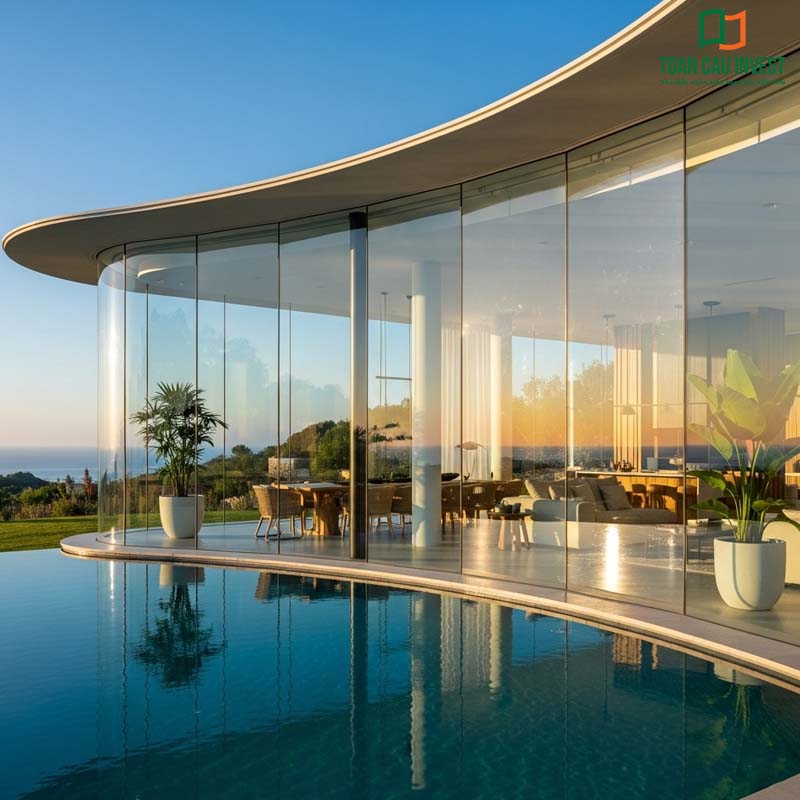
Factors Affecting the Cost of Curved Glass Facades
- Curvature and Glass Size: The smaller the bending radius and the larger the glass panel, the more complex the processing becomes, which directly increases the overall cost.
- Type of Glass: Curved tempered glass, curved laminated safety glass, and curved Low-E glass differ significantly in performance, safety, energy efficiency, and investment level.
- Customized Aluminum System: Curved glass facades require specially designed aluminum systems with precise bending, completely different from conventional flat aluminum profiles.
- Specialized Accessories and Sealants: The use of the correct curved gaskets, dedicated fittings, and high-performance structural silicone sealants directly impacts airtightness, waterproofing, and long-term durability of the system.
- Installation and Labor Costs: Installing curved glass facades requires highly skilled technicians and specialized equipment to ensure absolute accuracy and structural safety throughout the project.
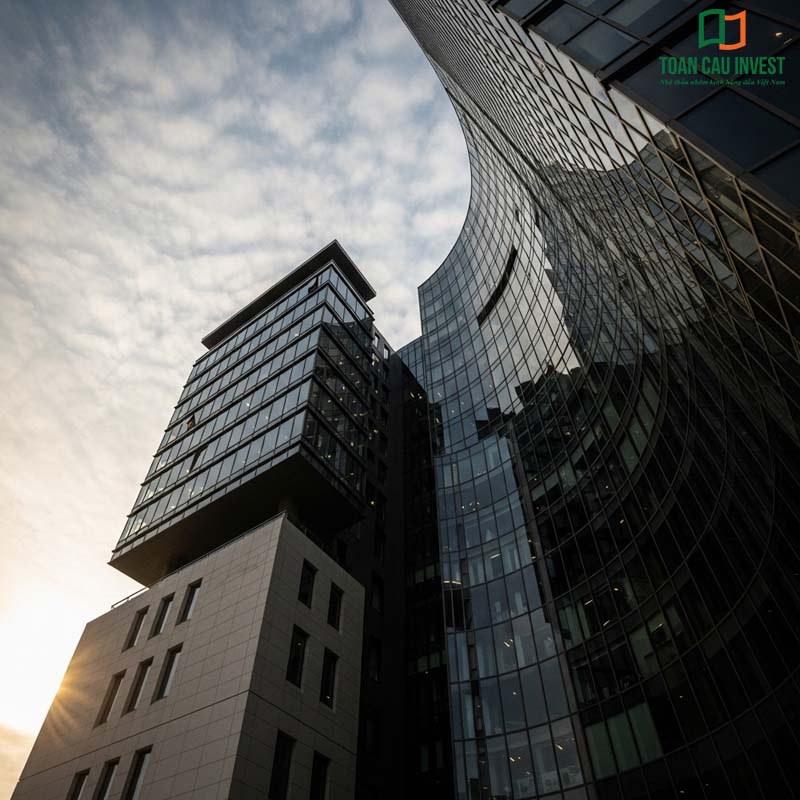
Challenges in Cost Control
-
Extended Production Time: Curved glass usually requires customized orders, which can delay the schedule if not planned well in advance.
-
Technical Deviations: Even minor errors in design or measurement can lead to costly reprocessing and material waste.
-
Dependency on System Integration: If the contractor cannot manage the entire process from design to installation, cost overruns become almost inevitable.
Effective Cost-Control Solutions
To optimize the cost of curved glass façade construction, choosing a contractor with comprehensive capabilities is the decisive factor. A professional contractor will:
-
Provide material solutions that balance functional requirements with budget constraints.
-
Ensure an integrated workflow from design, fabrication, to installation, minimizing unexpected costs.
-
Guarantee construction progress by reducing waiting time for curved glass production.
In conclusion, the cost of curved glass façade construction is not only determined by material prices but also significantly influenced by the contractor’s project management capability, experience, and integrated technical solutions.
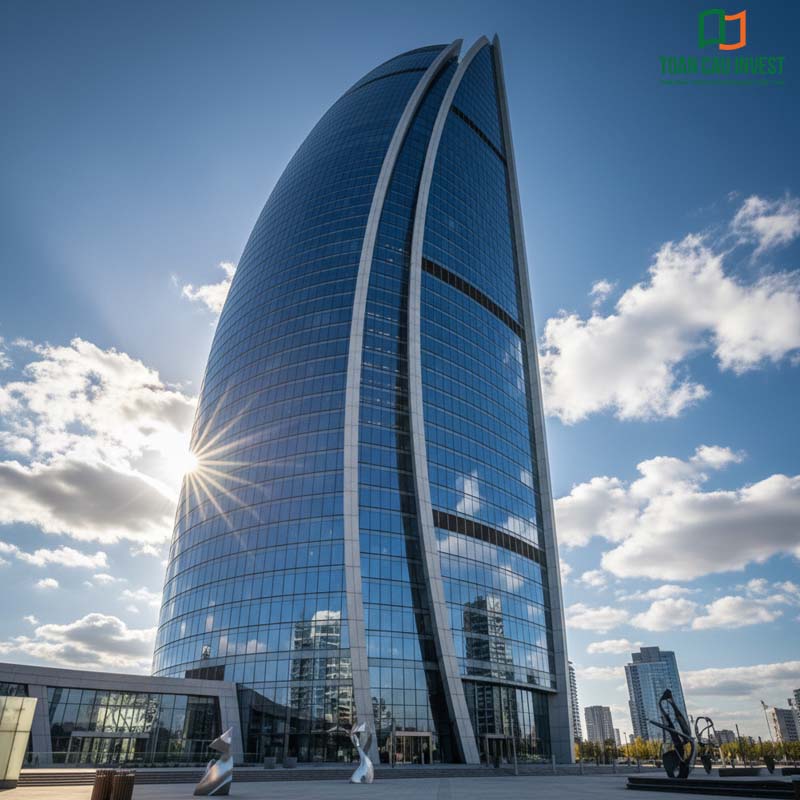
V. Toàn Cầu Invest – Mastering Curved Glass Façade Construction for Landmark Projects
In modern architecture, where aesthetics and uniqueness are increasingly valued, curved glass façades stand out as a signature solution. However, this is also among the most technically demanding applications, requiring contractors with comprehensive capabilities in design, production, and installation. Over the past decade, Toàn Cầu Invest has positioned itself as one of the few companies in Vietnam fully mastering this complex scope of work.
Advanced Production Capabilities and Modern Factories
-
Two state-of-the-art factories in Hòa Bình and Ho Chi Minh City, operating under ISO 9001 standards, enable Toàn Cầu Invest to independently fabricate custom curved aluminum systems and curved glass tailored to each project.
-
Specialized equipment for curved glass, including thermal bending furnaces, 5-axis CNC cutting machines, vacuum lifters, and custom support frames, ensures international-level precision with tolerances kept within the strictest limits.
-
Large-scale supply capacity, allowing simultaneous execution of multiple projects nationwide from Grade A office towers to luxury villas.
Engineering Expertise and Integrated Solutions
-
A team of 100+ engineers, architects, and façade specialists directly involved in technical consulting, engineering design, quality control, and on-site execution.
-
Technical mastery of curved glass parameters such as bending radius, thermal stress, wind load, and impact resistance, ensuring tailored solutions for each building’s requirements.
-
Total system approach: beyond installing glass, Toàn Cầu Invest optimizes the entire façade by integrating aluminum systems, curved gaskets, structural silicone sealants, and high-performance accessories — guaranteeing durability, performance, and long-term safety.
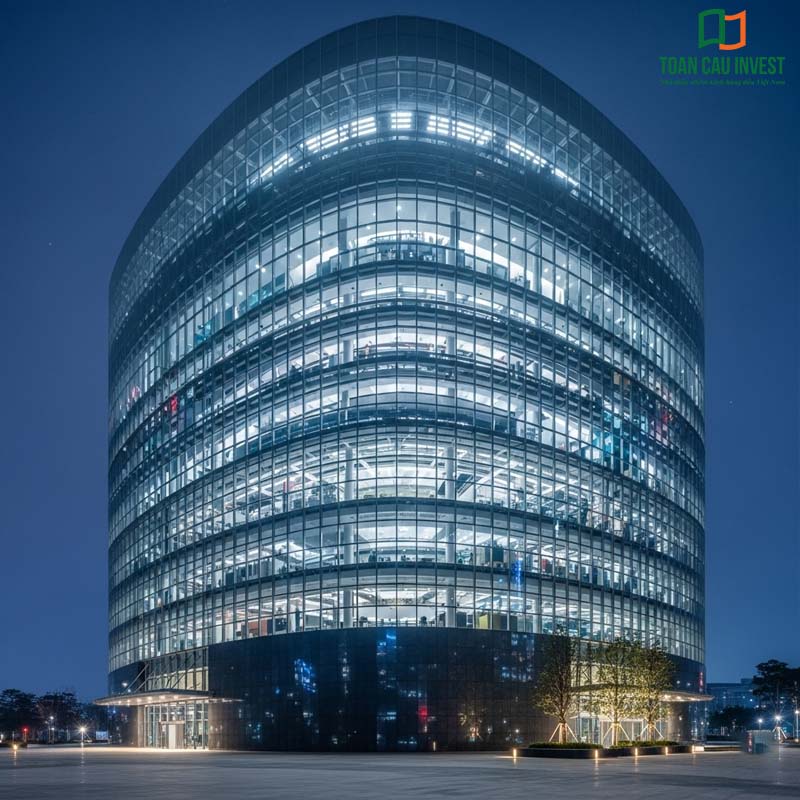
Proven Track Record on Landmark Projects
Toàn Cầu Invest has successfully executed multiple projects featuring curved glass façades in Hanoi, Ho Chi Minh City, and other major provinces, meeting the stringent requirements of international general contractors and leading developers.
At each project, Toàn Cầu tackled challenges such as:
-
Achieving installation tolerances under millimeters.
-
Meeting accelerated production schedules.
-
Ensuring strict acoustic and thermal performance.
This hands-on experience allows Toàn Cầu Invest to go beyond a typical contractor’s role, acting as a technical consultant from the earliest design stages.
Value Delivered to Investors and General Contractors
-
Cost Control: End-to-end process management from design to execution minimizes unexpected expenses.
-
On-Time Delivery: Despite longer lead times for curved glass, Toàn Cầu ensures schedules are met through in-house production and supply chain management.
-
Quality & Durability: Genuine materials, strict QA/QC procedures, and commitments of 3-5 years warranty with scheduled maintenance.
-
Integrated Solutions: From façades to aluminum-glass doors and supporting details, ensuring both aesthetics and performance at the highest level.
The Architectural Signature of Curved Glass
Curved curtain walls are not just about aesthetics they are the architectural statement that defines a building’s prestige. Yet, their successful execution requires a contractor with deep knowledge of materials, proven engineering capability, and integrated resources across design – production – installation.
With more than a decade of expertise and a portfolio of landmark projects, Toàn Cầu Invest is ready to partner with investors and general contractors on every curved glass façade project from concept design and engineering to production and turnkey installation.
Contact Toàn Cầu Invest today for tailored consultancy and the most optimized curved curtain wall solution for your project.
- Hotline: 0902 50 1185 – 0902.168.238
- Website: www.toancauinvest.vn
- Head Office: LK 12-31, Van Khe New Urban Area, La Khe Ward, Ha Dong District, Hanoi, Vietnam.

 Tiếng Việt
 한국어
한국어 中文 (中国)
 ພາສາລາວ
 ភាសាខ្មែរ